Direct Documentation (1.0)
Direct Documentation is my new analogue photographic documentation project built around the physical connection between artworks, exhibitions and spaces and their photographic representation, with a particular focus on maintaining a direct physical connection between the two.
The photographs are made on color reversal film (slide film), producing a physical positive image. The film has a fixed color balance, which remains unchanged regardless of the light in which the photograph is made. The developed transparencies constitute the primary documentation and are digitized with the aim of maintaining as close a relationship to the physical medium as possible.
Method
The original documentation is the physical transparency.
Any adjustments to the scene must be physically carried out before exposure.
No external light sources are added. Existing light may be subtracted if it can be turned off.
The same film stock is used for all documentation.
Perspective, exposure and composition are established in-camera.
The same color balance is used in all situations: daylight. No correction is made for the color temperature of the existing light. Daylight will therefore appear relatively neutral, tungsten-lit interiors will appear warm, while fluorescent and LED sources may introduce green or magenta tints.
No filters for color correction, effects or polarization are used.
The developed transparencies constitute the original documentation and are accompanied by digitized versions.
Digitization should reproduce the physical transparency as closely as possible. Adjustments are limited to those necessary to make the digital reproduction correspond to the appearance of the original transparency.
The film borders are included in the primary digital version to maintain a visible reference to the specific physical transparency from which the digital image originates.
Cropped versions may be made, but only when presented alongside or accompanied by the original bordered version, so that the connection to the physical medium is maintained.
Minor removal of dust introduced during digitization is allowed, as well as geometric corrections necessary to reproduce the physical film frame accurately.
Direct Documentation is an ongoing project and will be updated as the project and the world develop.
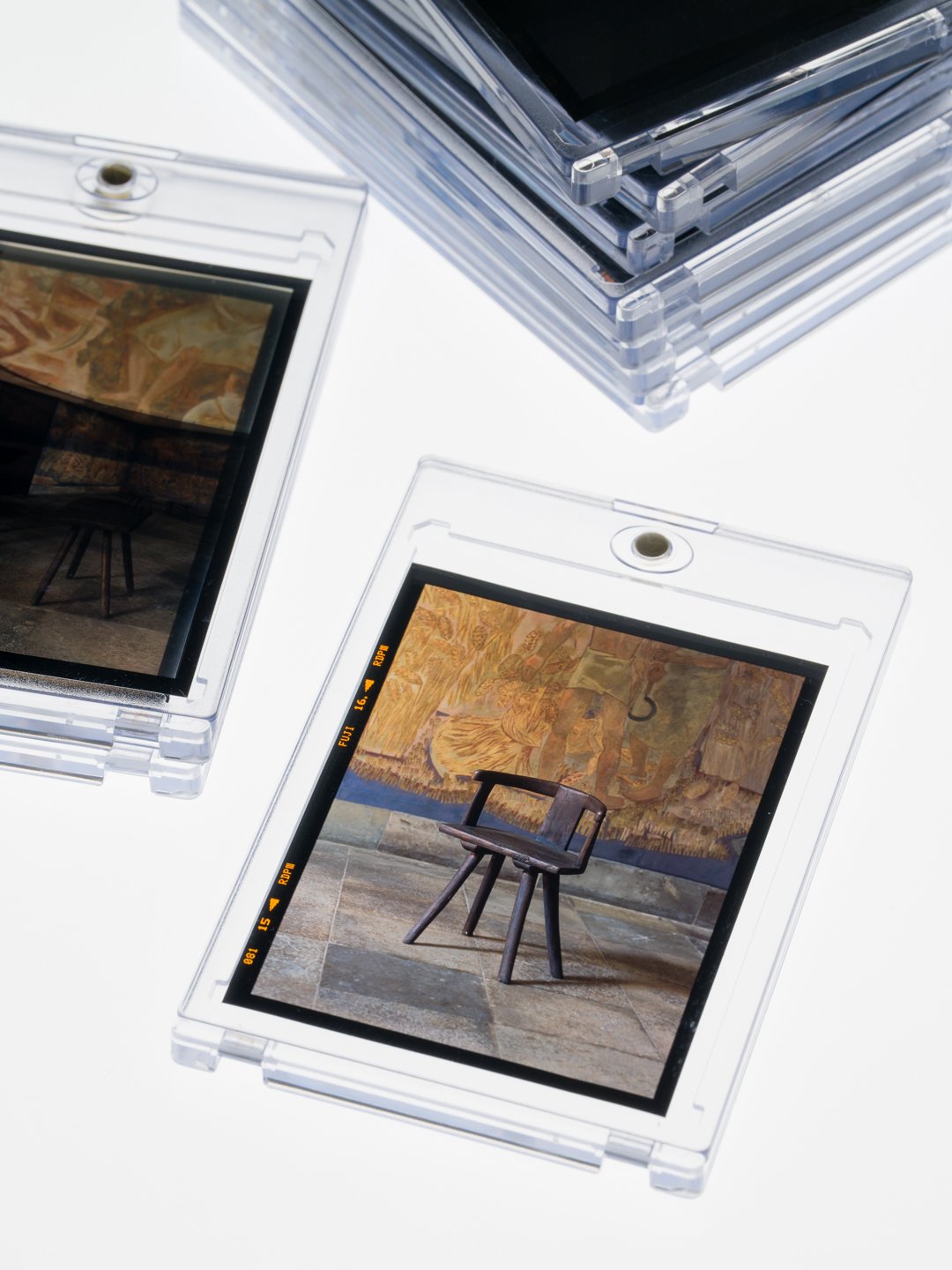
Mentze Ottenstein for Søndermarken Krematorium